Things to Do in Prague: A Complete Guide
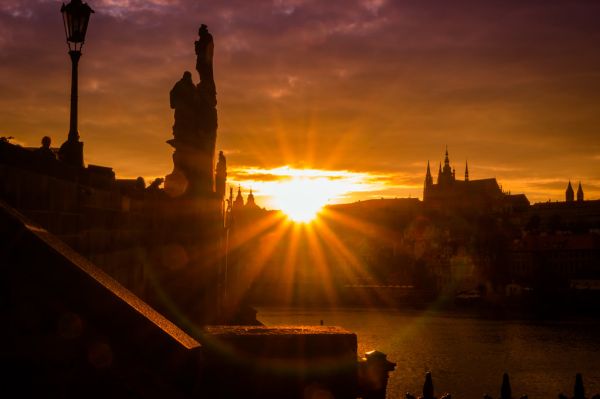
Prague’s old town survived the twentieth century almost entirely intact, which means the Gothic spires, baroque facades and medieval bridges you see in photos are exactly what greets you in person. It’s one of the few European capitals where the historic centre was never seriously bombed, and that history is the whole point of a visit. If you’re mapping out things to do in Prague, the good news is that a lot of the best of it is within easy walking distance.
Things to do in Prague: the Charles Bridge and Old Town
The Charles Bridge, lined with baroque statues and usually thick with street performers and artists, connects the Old Town to the castle district across the Vltava river. Cross it early in the morning before the crowds build if you want photos without a hundred other tourists in them. On the Old Town side, the Astronomical Clock draws crowds on the hour for its mechanical show of apostles, and while the spectacle itself is brief, the medieval square around it is worth lingering in regardless.
Prague Castle and the view from the hill
Prague Castle, according to some measures the largest ancient castle complex in the world, dominates the skyline from across the river. St Vitus Cathedral inside its walls took nearly six hundred years to complete and the Gothic stonework and stained glass reward a slow walk through the interior. The castle grounds are free to enter, though the interiors of the main buildings require a ticket. Golden Lane, a row of tiny historic houses built into the castle fortifications, is a quirky detour that used to house goldsmiths and now holds small exhibits and shops.
Prague’s beer halls and local food
The Czech Republic drinks more beer per capita than any other country, and Prague’s beer hall culture is central to understanding the city. Traditional pubs serve Pilsner Urquell and other local lagers alongside hearty dishes like goulash and roast pork with dumplings, usually in large, communal rooms with long shared tables. U Fleku, brewing its own dark lager since the fifteenth century, is one of the oldest breweries in the world and worth a visit even if it’s firmly on the tourist trail by now.
Jewish Quarter and Prague’s layered history
The Josefov district preserves one of Europe’s most complete surviving Jewish quarters, including several historic synagogues and the Old Jewish Cemetery, where thousands of graves are stacked in layers due to a lack of burial space over centuries. It’s a sobering but essential stop that adds real depth to a visit otherwise dominated by castles and beer halls. The area has also become fashionable in recent years, with high end boutiques now sitting alongside the historic sites.
Vysehrad and a quieter side of the city
For a break from the crowds around the Old Town and castle, Vysehrad, an old fort on a hill south of the centre, offers similar river views with a fraction of the visitors. The complex includes a cemetery where many notable Czech artists and composers are buried, along with a neo Gothic church and quiet parkland. It’s a good half day option if you’ve already covered the main sights and want somewhere more local. Travellers heading further into central Europe might also enjoy our guide to things to do in Budapest, another Danube adjacent city rich in similar history.
Where to stay in Prague
Old Town puts you within walking distance of the main sights but comes with higher prices and noise from the nightlife scene most weekends. New Town, despite the name also centuries old, offers a slightly calmer, more residential feel while staying close enough to walk everywhere that matters. For a quieter base with easy tram access, Vinohrady, a leafy district east of the centre known for its own restaurant scene, is worth considering if you don’t mind a short commute into the historic core.
Getting around Prague
The metro, trams and buses cover the city efficiently and cheaply, and a short term travel pass is worth buying if you’re staying more than a couple of days. The historic centre itself is very walkable, though the cobbled streets and hills around the castle can be tough going in poor footwear. Spring and autumn offer the best balance of mild weather and manageable crowds, while the Christmas markets in the Old Town Square make December an atmospheric, if colder, time to visit.
Still deciding where to go next? Our guide to things to do in Cambridge might help.