UK Staycation Ideas: The Complete Guide

There was a time when telling friends you were staying in the UK for your main holiday got you a slightly pitying look, as if you’d failed to book something better. That attitude has more or less disappeared. A UK staycation is now a genuine first choice for a huge number of people, not a fallback plan, and once you actually add up what you get for the money and the hassle saved, it’s easy to see why.
Why staying home suddenly makes sense
Money is the obvious driver. Flights, airport transfers, currency exchange, travel insurance, it all adds up before you’ve even reached your destination. A weekend in Cornwall or the Cotswolds skips most of that entirely. You drive or take a train, you arrive, you’re already spending on the things that actually matter, like food and the view.
Convenience plays a huge part too. No security queues at 5am, no worrying about liquid limits, no risk of a delayed flight eating into your one week off. If your dog needs sorting or you’ve only got two days free, the UK is simply more forgiving. And there’s a more personal reason a lot of people don’t expect: you start noticing how much of your own country you’ve never actually seen. Londoners in particular are often better travelled in Southeast Asia than they are in Yorkshire, and a staycation is usually the thing that finally corrects that.
The main types of UK staycation worth planning around
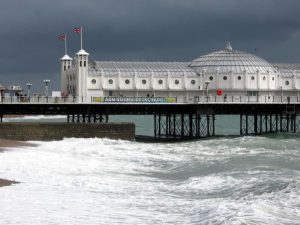
Seaside towns are the classic choice for a reason. Whitstable, Brighton, Whitby, St Ives, each has its own personality, but they all deliver the same basics well: good seafood, a walk along the front, and a change of pace that doesn’t require a passport. Even in unpredictable weather, there’s something genuinely restorative about a coastal town out of season, quieter and cheaper than the summer crowds.
Countryside cottages are the other big pull, particularly for anyone craving a proper reset. The Cotswolds, the Lake District, the Peak District, Northumberland if you want real isolation. A fire, a view, no phone signal if you’re lucky, and nowhere to be. This is also where National Trust properties earn their keep. A single membership gets you into hundreds of historic houses and gardens across the country, and building a weekend around two or three nearby properties is one of the easiest ways to fill a trip without much planning.
Historic cities are worth a category of their own too. York, Bath, Edinburgh, Durham, all compact enough to properly explore on foot over a long weekend, all stacked with the kind of architecture and history that makes you forget you didn’t need a flight to see it. If you’re based in the capital and want ideas closer to home first, our guide to things to do in London is worth a look before you plan further afield, since a lot of what makes a good city break applies just as well on your own doorstep.
Making it actually work: timing, weather and distance
The single biggest variable with any UK staycation is the weather, so it pays to plan around it rather than hope for the best. Coastal trips are more forgiving with a bit of wind and cloud than you’d think, but if you want a genuine shot at sunshine, late May to early September is your safest window. Countryside breaks, on the other hand, can be just as good in autumn or even winter, when log fires and misty walks become the whole point rather than a backup plan.
Booking off-peak, meaning weekdays or just outside school holidays, makes a real difference to both price and crowds. The same cottage that’s fully booked and pricey in August can be half the cost and completely empty in early June or late September.
Distance from London is worth mapping out properly too, because it changes what kind of trip is realistic. Within about an hour by train you’ve got Brighton, Oxford, Cambridge and Windsor, easy enough for a single day if you wanted. Push to two hours and Bath, York’s outer reach, the Cotswolds and the Kent coast all open up, perfect for a proper weekend. Go to three hours and you’re looking at the Lake District, North Wales or the Peak District, which really deserve at least two nights to be worth the journey.
Matching the trip length to the destination
A weekend staycation works best when you pick one thing to focus on: a single seaside town, one historic city, one cottage with a good pub nearby. Trying to cram in three locations over two days usually means you spend more time in the car than anywhere worth remembering.
A full week gives you room to actually slow down, which is really the whole point of the exercise. Base yourself somewhere central to a region, like the Cotswolds or the Lakes, and use day trips to branch out rather than moving hotels every other night. It’s a smaller-scale version of what experienced travellers do differently on every trip, picking a base and exploring outward rather than constantly packing and unpacking. Whatever length you’ve got, the UK rewards people who actually plan a little instead of assuming it’ll always be there for next year.